

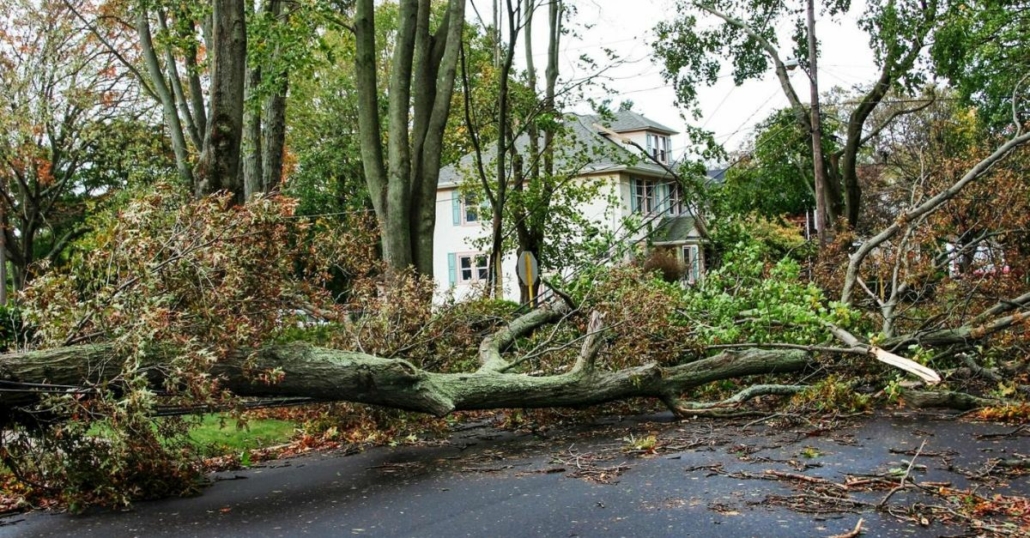
Storm Season Survival Guide: Identifying Hazard Trees Before the Rain
Spring and summer remain Georgia’s rainiest seasons. While precipitation obviously helps trees and other flora thrive, a heavy rain can sometimes cause a tree hazard.
The calm before the storm is the best time to be proactive and avoid potential tree problems. A Premier Tree Solutions pre-storm tree inspection can help save money and even lives in the long run.
The following are three of the most common signs of potential hazards.
Root Zone Disturbances and Leaning
Roots anchor trees, and the Iowa State University Extension and Outreach quickly points out that strong, stormy winds can potentially blow over a tree with compromised roots, especially when the soil is wet. Keep an eye out for exposed or decayed roots as well as fungus growth or cracks in the soil located within the root plate.
Has a tree developed a sudden lean? According to the Alabama Cooperative Extension System, a lean that worsens quickly is a warning sign of impending failure. Another major red flag is a tree with a lean where the soil on the opposite side is lifting. Both of these conditions make a tree extremely vulnerable during a rainstorm and call for immediate attention.
V-Shaped Bark Unions
Do you notice any V-shaped unions on a tree’s branches? These have weak attachment points and are more subjective to split or break during a windy rainstorm. The Purdue University Extension recommends eliminating these branches, especially those with tight or narrow branch junctions. Branches with bark inclusion, which means bark has grown inward between two stems, are problematic as well.
Internal Decay and Deadwood
Internal decay and deadwood make a tree more susceptible to falling during a storm. However, these invisible dangers can be difficult to spot. Holes from woodpeckers or previous pruning, deep cavities, and sunken or peeling segments of bark are all signs of internal wood decay. Other signals of internal decay include fungal growth on the trunk, roots, or branches, spongy or soft wood, cracks and splits, and a swollen base of the trunk. Keep in mind a tree may look healthy on the outside, but could be experiencing internal decay.
Tree branches not receiving enough nutrients to survive naturally die off. If a tree’s branches aren’t presenting buds or don’t have leaves, that portion of the tree has likely become deadwood. Beware of sizable, brittle branches without leaves. These are indicative of deadwood and can fall during even a mild rainstorm.
When to Call Premier Tree Solutions
With a little education, you can spot signs of trees that might fall during a rainstorm. However, it’s important to rely on a professional to take proactive measures.
Don’t be left out in the rain. Have Premier Tree Solutions inspect your trees today to make sure your property weathers the storm. Call 404-252-6448 or schedule a complimentary assessment online.