

The Invasion Check: Protecting Your Maples and Oaks from 2026’s Top Pests
Georgia has a strong reputation for its gorgeous tree canopies. Oak trees, with their sprawling, regal crowns, and lush maples, boasting vibrant red, yellow, and orange foliage, are both iconic varieties among the state’s treasured flora. And countless homeowners display them with pride.
However, early 2026 has seen an increase in invasive pests moving throughout the Southeast, threatening the livelihood of these trees. To help protect your prized timber from pesky invaders, Premier Tree Solutions offers the following tips and which critters to look out for this season.
The Big Three Threats to Maples and Oaks
According to experts, a trio of pests are arguably rising to the top as being the most troublesome in the Southeast.
Asian Longhorned Beetle
According to Clemson University, South Carolina is currently experiencing an Asian longhorned beetle infestation. With its close proximity, this issue could potentially move its way into Georgia. These insects are problematic for hardwoods, especially maple trees. The U.S. Department of Agriculture (USDA) explains that Asian longhorned beetles attack and kill trees by growing inside them and feeding on the living tissues that carry nutrients. Infested trees become hollowed out and are unable to heal, which can increase the risk of a fall.
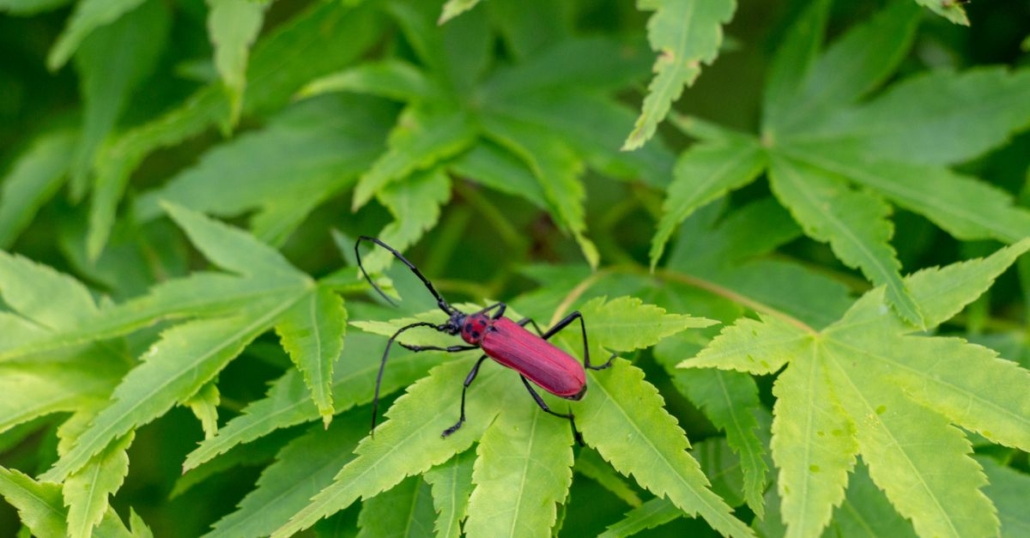
These creatures are approximately the size of an almond, and have black and white antennae, which are longer than the insect’s body. Their bodies are shiny and black with white spots, and they have six legs and bluish-colored feet.
Evidence of Asian longhorned beetles include round exit holes in tree trunks and branches, measuring as large as the size of a dime. Look for oval-shaped egg sites or round wounds chewed into the bark. At the base of the tree, you may see sawdust-like material. If you expect an infestation in a tree, contact Premier Tree Solutions immediately.
Spotted Lanternfly
Don’t be charmed by this invader’s jumbo, eye-catching wings. The brown forewings feature black spots, while its hind wings are deep red with black spots, and black and white stripes. Spotted lanternflies have yellow abdomens with black bars. They’re approximately one inch in length.
Colorful looks aside, these insects continue to cause trouble in the Peach State. After detecting them in 2024, the Georgia Department of Agriculture is now identifying them as a major statewide threat in 2026. The PennState Extension reports that while spotted lanternflies do not generally kill healthy, established hardwood trees, they drain vital nutrients from trees, including maple, which can cause branch dieback and plant health decline.
According to the USDA, when feeding, they excrete a sticky, sugary liquid called honeydew, which has a vinegar-like smell. The residue encourages the growth of sooty mold, which blocks sunlight and can lead to additional damage. Spotted lanternflies are typically found in large groups when feeding. Be on the lookout for egg masses that resemble smears of gray mud.
Spongy Moth
In the late spring, you might find huge clusters of fuzzy caterpillars gathering on trees, including oak. That could be a sign of a spongy moth infestation. Although they’re usually found in the Northeast, Midwest, and Appalachian regions, spongy moths are now considered a serious potential threat to our forests by the Georgia Invasive Species Task Force.
Spongy moths are known to defoliate entire forests. The USDA says a heavily infested forest can have a barren, wintry look even during peak summer. If untreated over multiple seasons, spongy moths not only strip leaves, but can kill trees. Persistent defoliation can weaken even the sturdiest of oak trees, opening the door to secondary diseases such as root rot.
Call Premier Tree Solutions for a Pest Inspection
If any of the aforementioned signs are apparent, reach out to Premier Tree Solutions for a tree inspection. Our experts have a knowledgeable eye for problematic insects and can help guide you through potential next steps, including reporting any infestations to the Georgia Forestry Commission. Call 404-252-6448 or schedule a complimentary assessment online.