

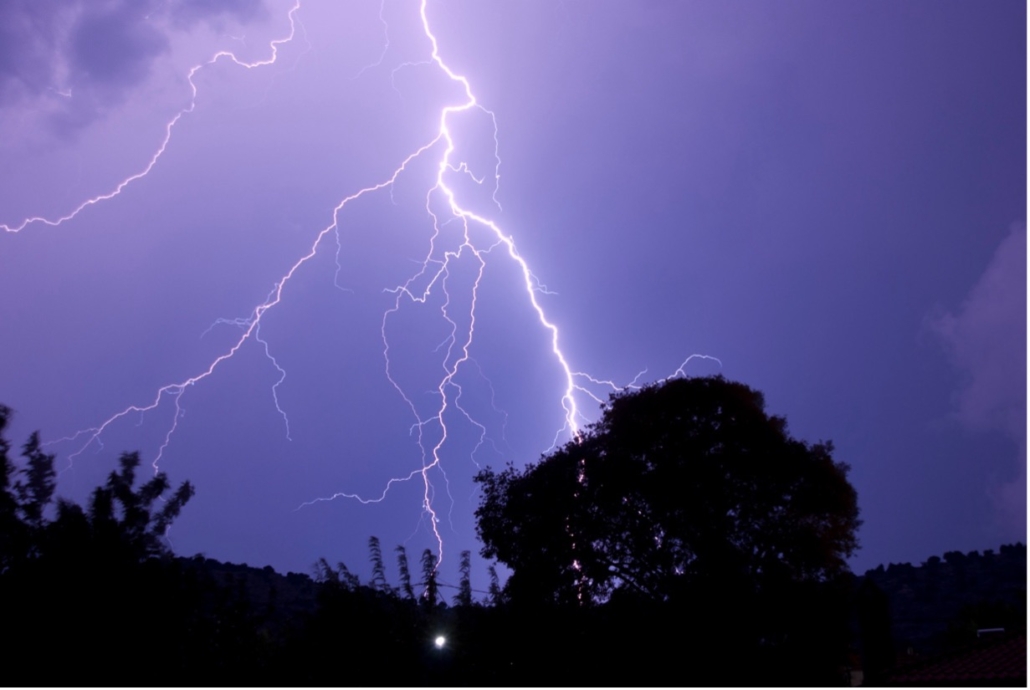
Lightning Strikes and Tall Oaks: What to Do When Your Tree Takes a Hit
The metro area’s collection of oak trees remains one of our cultural calling cards. Yet when summer thunderstorms bring lightning flashes, our treasured tall oaks can also become natural lightning rods.
When lightning hits an oak, the moisture inside the wood instantly superheats into steam, causing bark to explode off the trunk or causing severe internal splitting. The Alabama A&M and Auburn Universities Extension says lightning carries up to 100 million volts and reaches temperatures of 50,000 degrees Fahrenheit, which is five times the temperature of the sun.
While a strike is scary, it isn’t always an immediate death sentence. Here are three of the critical action items to take right after a strike to protect your property and your tree.
Safety First and Triage Second
Safety is always the number one priority. Just after the storm, make sure you keep yourself and others, including pets, away from the tree. Immediately call a tree service company to assess the tree as soon as possible. In the meantime, from a safe distance, give the tree a visual inspection. According to the Georgia Forestry Commission, the most noticeable symptom of a lightning strike on a tree, besides bark damage, is leaf wilting from disrupted water transport in the stem or roots. Additionally, do you spot any immediate hazards such as dangling branches or a split trunk that could fall on your home? Did the strike cause power lines to come down or do you see signs of a fire? If either of the latter proves true, contact emergency responders.
Provide Immediate Moisture
Obviously, lightning can cause a shock to the tree’s system, literally. It disrupts the tree’s ability to move water from the roots to its canopy. Once any emergency hazards are cleared, you can give the tree a slow, deep soak with water. Use a hose to water around the tree’s drip line to prevent tissue dehydration.
Schedule a Professional Evaluation
After a lightning strike, a tree’s internal vascular system can collapse, and its roots may go into shock. However, this can take weeks or even months to fully appear. This means what looks like a surviving tree just after the strike could become structurally compromised by the following season. Additionally, pests, such as bark beetles, are known to take advantage of weakened oaks. A member of the Premier Tree Solutions team can evaluate the tree from top to bottom and customize a long-term recovery plan.
Premier Tree Solutions: Here to Help in a Flash
A lightning strike requires swift, cautious action. By prioritizing safety, providing immediate moisture, and securing expert guidance, you give your majestic oak the best possible chance at recovery.
If a storm has recently impacted your property, contact Premier Tree Solutions for a comprehensive risk and health assessment. Call 404-252-6448 or schedule a complimentary assessment online.
Q&A Recap
What happens physically when lightning strikes an oak tree?
When lightning hits an oak, the moisture inside the wood instantly superheats into steam, causing bark to explode off the trunk or creating severe internal splitting.
Should you call emergency services if a tree on your property is struck by lightning?
Call emergency services (911) only if the strike causes an active fire or downs power lines. For general health, risk, and stability assessments of the tree, contact a professional tree service company.
What is the most noticeable visual symptom of a lightning strike on a tree?
Besides visible bark damage, the most noticeable symptom is leaf wilting, which happens when the strike disrupts the tree’s ability to transport water through its stem or roots.
How should you immediately treat an oak tree after a strike?
Once emergency hazards are cleared, give the tree a slow, deep soak with a hose around its drip line to help prevent tissue dehydration caused by disrupted water transport.
Why is a professional evaluation necessary even if the tree looks fine?
A tree’s internal vascular collapse and root shock can take weeks or months to fully appear. A tree that looks fine initially can become structurally compromised or vulnerable to pests like bark beetles by the following season.