
Mushrooms at the Base of Trees: When to Worry
A cluster of mushrooms popping up around a tree may have an air of magical, pop culture whimsy, conjuring images of gnomes, “Alice in Wonderland,” or Super Mario himself.
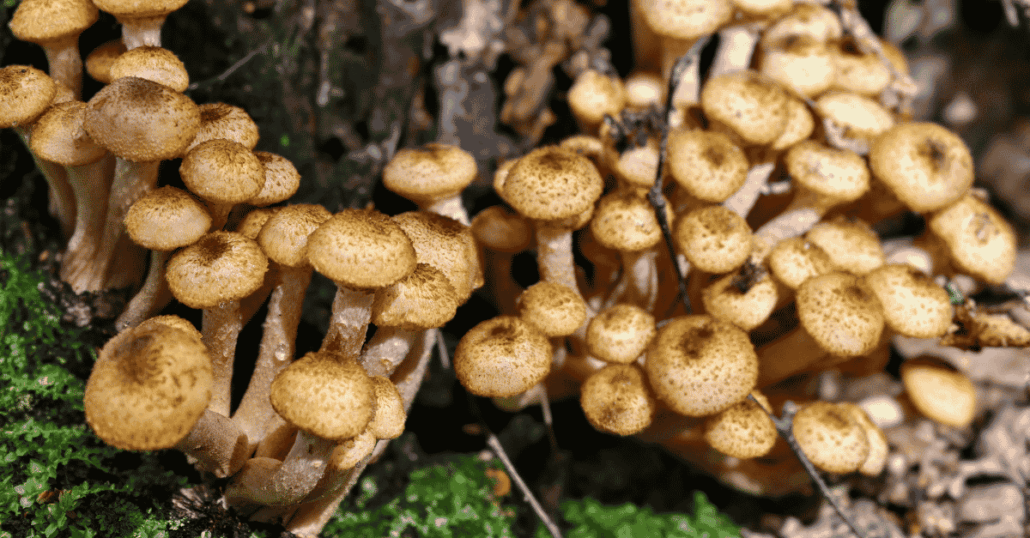
Instead of something fantastical, mushrooms can signal a hidden, real-world issue. While these fungi may be harmless, mushrooms attached to the tree or its roots are telling a story with a not-so-happy ending: internal decay.
Shroom Story: Harmless vs. Harmful
Not every mushroom situation near a tree can prove to be harmful. If you spot fungi growing in the grass or pine straw a few feet from a tree, the mushrooms are most likely breaking down dead organic matter such as buried roots or old mulch. In this case, the mushrooms are, in general, harmless to a living tree.
However, if you see mushrooms or conks directly attached to the trunk, buttress roots, or root flare of a tree, it means internal decay is already happening and has been for quite a while. According to the University of Georgia Cooperative Extension, the tree is in the advanced stages of decay and infection, and tree failure is a real possibility.
Red Flag Fungi to Keep on Your Radar
Some wood-decay fungi have a reputation for causing serious destruction to living trees. The following are three that fit that bill and are among the most frequently found in Georgia and the Southeast. While an infected tree may look perfectly healthy from the outside, each of these types of fungi has the potential to create hazardous conditions such as out-of-the-blue tree failure or blow-over during extreme weather.
- Armillaria: TCI Magazine calls this root rot worthy of note for several reasons. First, it kills tissue, which can stop the transportation of nutrients and water. Other reasons armillaria is especially challenging include the fact that its mushrooms can be difficult to identify, and it spreads rapidly underground through root contact and root-like strands called rhizomorphs.
- Ganoderma: According to the University of Florida’s Institute of Food and Agricultural Sciences, some species of Ganoderma are especially concerning because they break down essential elements that make up the primary structural components of wood. They can go after the tree’s lower trunk, root flare, and structural roots, resulting in the hollowing out of its internal support system.
- Weeping Conk: Another concerning fungus, according to TCI Magazine, weeping conk causes white rot in the heartwood of lower trunks and major roots, and it is difficult to judge the full breadth of internal decay without excavating the root system. Its appearance can change, from cream-colored to crusty, blackened, or blob-like. This makes it easy to overlook entirely or, at the very least, misidentify.
Let Premier Tree Solutions Identify Funky Fungi
Have you seen mushrooms around your tree? Don’t wait for the next storm to put your tree’s stability to the test.
Contact Premier Tree Solutions for a root collar and tree health inspection. Call 404-252-6448 or schedule a complimentary assessment online.
Q&A Recap
Are mushrooms around the base of a tree always bad?
No, mushrooms growing in the surrounding lawn or pine straw a few feet away are generally harmless fungi breaking down buried organic matter. However, mushrooms or shelf-like conks growing directly on a tree’s trunk, flare, or roots indicate internal wood decay and potential structural instability.
Which mushroom species indicate severe tree decay in Georgia?
Three of the more common wood-decay fungi found in Georgia and the Southeast are Armillaria, Ganoderma, and Weeping Conk. While an infected tree may look fine on the outside, each of these types of fungi has the potential to create hazardous conditions such as out-of-the-blue tree failure or blow-over during extreme weather.
What should I do if I find mushrooms attached to my tree?
If mushrooms or conks are growing directly on your tree’s bark or root collar, schedule a professional tree health and root collar inspection immediately to evaluate the extent of internal decay and prevent unexpected tree failure.