

DIY Tree Care Mistakes Georgia Homeowners Should Avoid
Owning a home in a forest-rich state like Georgia means tree care is virtually unavoidable. At one time or another, you will most likely find yourself branching out and tending to a tree.
While undertaking a DIY tree care project might sound like a money-saving option, mistakes can sometimes prove costly. The following are a few of the most common tree care mistakes and how to avoid them.
Just Say No to Volcano Mulching
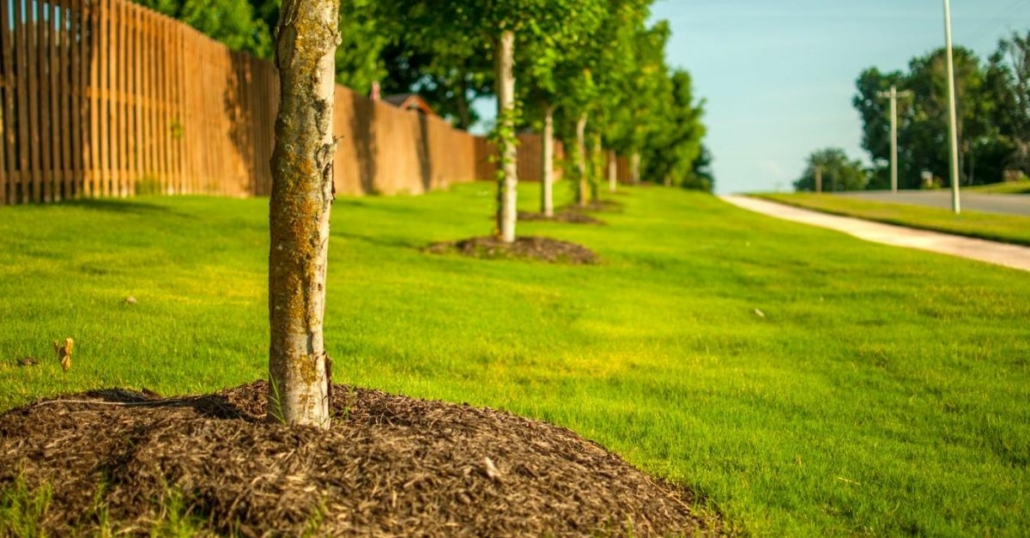
Mulching on your property is a great way to stop erosion, keep weeds at bay, conserve moisture, and regulate soil temperature. However, a common landscaping gaffe when trying to protect a tree is creating a mulch volcano. That means piling mulch high up against a tree’s trunk, creating a volcano shape. The mulch allows Georgia’s humidity to trap moisture on the tree’s bark, which leads to bark decay, root rot, insect troubles, and even the slow death of the tree.
Doing it Right: Skip the volcano and opt for the donut method. The University of Georgia Cooperative Extension suggests pulling mulch several inches away from the tree’s trunk and extending it to at least the dripline of the tree. The end result resembles the shape of a donut. Make sure the mulch is 3- to 4-inches thick.
Improper Pruning
The wrong pruning technique can easily do more harm than good. This includes topping, a method where the top of a tree’s main branches are cut back to stubs. It can cause starvation, decay, weak regrowth, and sunscald, and even prove fatal for many types of trees.
Lion’s tailing is another pruning snafu that can wreak havoc on a tree. It calls for stripping away the interior branches and foliage with only tufts of leaves remaining at the ends of the branches. According to the University of Florida’s Institute of Food and Agricultural Sciences, this technique can cause branches to weaken, sunscald, rotting and cracks, increased disease and insect vulnerability, and more.
Doing it Right: The basic best pruning practices in Georgia call for focusing on removing dead, diseased, or damaged branches. The University of Georgia Cooperative Extension recommends using the three-cut method to avoid damaging the bark around the cut. And refrain from removing more than 25% of a tree’s canopy in a single season.
Ignoring the Root Zone
A tree’s root zone is the portion of soil where most of the roots grow, and it usually spans well past the tree’s drip line or canopy. The Georgia Forestry Commission offers a formula to help you determine both the total root zone area and the critical root zone of your tree.
Keep an eye out for soil compaction, which can be a silent killer, and the red clay found in Georgia compacts easily. The University of Florida’s Institute of Food and Agricultural Sciences explains how densely packed soil is difficult for roots to penetrate and can lack water and oxygen.
Doing it Right: Ways to avoid soil compaction and protecting the root zone include keeping cars out of the area and refraining from digging in and around the root zone.
Rely on Expertise From Premier Tree Solutions
Offering top-notch professionalism and excellent client service, Premier Tree Solutions can help you avoid potentially expensive DIY tree care mistakes. Call 404-252-6448 or schedule a complimentary assessment online.